
How can you store solar energy at home? The sun won’t wait – and neither should your battery
How can you store solar energy to use it day and night? Discover SunPower battery solutions, backed by a 10‑year warranty.
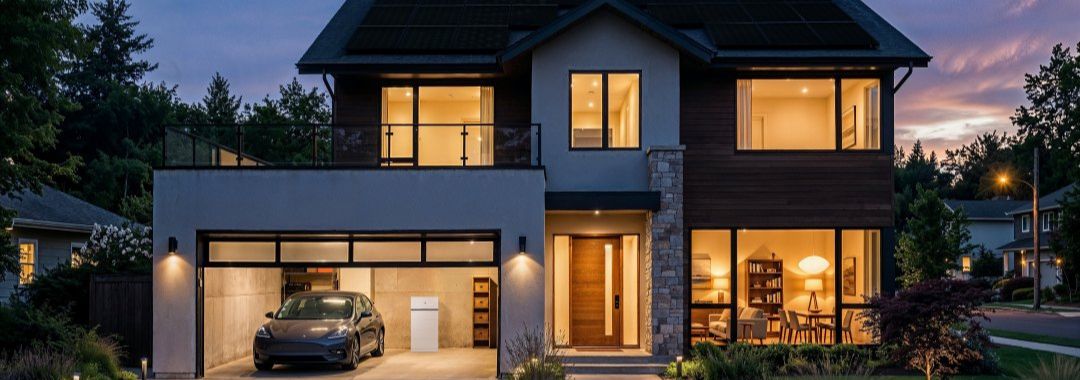
You’ve installed solar panels, or you’re seriously considering it. That’s great news. But there’s one reality many people don’t anticipate: the sun shines in the middle of the day, when you’re usually at work, school, or out and about. And in the evening, when everyone’s back home and it’s already dark, your panels have effectively clocked off.
So the real question isn’t just “how do you generate solar energy?”, but “how do you store it for when you actually need it?”
That’s exactly what solar energy storage is designed to do. And today’s solutions are reliable, accessible, and surprisingly easy to understand.
Why has solar energy storage become essential?
Without storage, even a high-performing solar system only lets you use around 30–40% of the electricity you generate. The rest is exported to the grid - often at a relatively low rate. It’s a bit like filling a leaky bucket: you produce energy, but much of it is lost.
The picture is simple. Across Europe, retail electricity prices remain high and volatile, while generating your own solar power is significantly cheaper per kWh. Every kilowatt-hour you use from your battery is one you don’t need to buy from your supplier.
The benefits are twofold:
- Lower energy bills
- Greater independence from energy market fluctuations
And let’s be honest - there’s also a certain satisfaction in turning on the lights in the evening knowing they’re powered by the sun you captured earlier that day.
What are the solutions for storing solar energy?
Several technologies are available. Here’s a clear overview - no technical jargon.
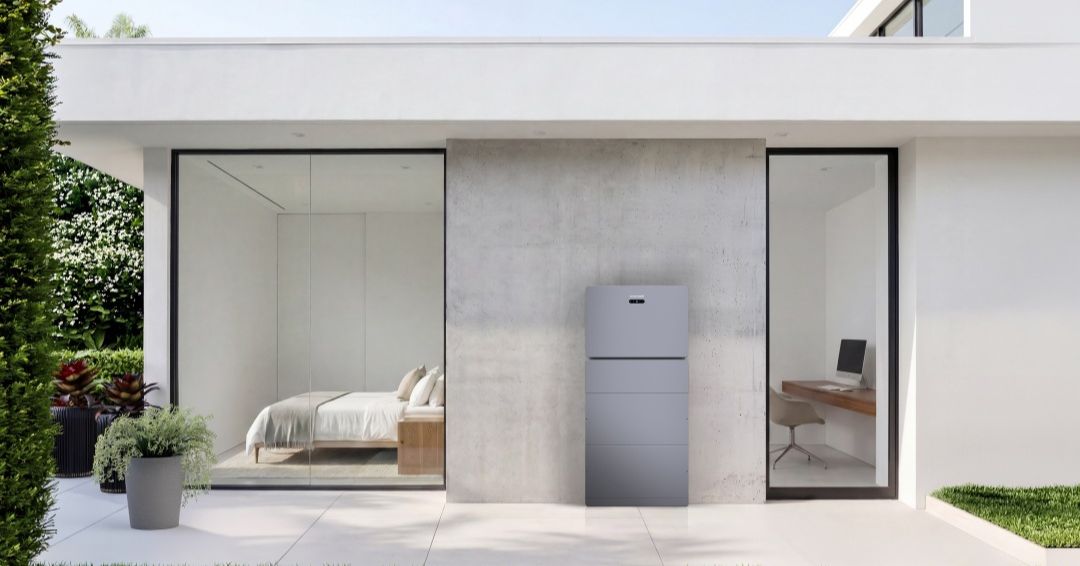
LFP batteries: the leading solution
Today, Lithium Iron Phosphate (LFP) technology has become the preferred choice for residential installations - and for good reason.
Compared with other lithium chemistries, LFP stands out for:
- Excellent thermal stability
- High safety levels
- Long lifespan
LFP batteries can handle thousands of charge and discharge cycles while maintaining performance, typically lasting between 10 and 15 years.
While lithium-ion batteries are known for high energy density, LFP is widely considered the best option for home use: robust, reliable, and perfectly suited to everyday operation.
That’s why SunPower has selected this technology for its home energy storage systems - to deliver a durable, safe, and high-performing solution.
Virtual storage: an alternative to consider
Don’t have a physical battery yet? Some providers offer “virtual storage”. Your surplus electricity is exported to the grid and credited back to you on your energy bill.
It’s an option - but less advantageous than having a battery at home, as you still depend on the grid and its changing tariffs.
Smart energy management: beyond simple storage
Adding a battery is just the first step. To truly maximise performance, you need smart energy management.
This involves integrating:
- A battery
- A smart/hybrid inverter
The system doesn’t just store electricity - it intelligently manages energy flows between generation, consumption, storage and the grid in real time.
Solar power is used first, excess energy is automatically stored, and reliance on the grid is reduced to a minimum - without you having to do anything.
With this approach, self-consumption rates can reach 70–80%, compared to only 30–40% without storage.
How to size your solar storage system
This is the question everyone asks - and the honest answer is: it depends on your situation.
As a general guide:
- A 3–4 person household (100–120 m² home):
→ 8–10 kWh battery + 3–6 kWp system is typically sufficient for morning and evening use (cooking, lighting, appliances)
- Larger homes or additional uses (EV charging, pool, heat pump):
→ 12–15 kWh or more
To understand your potential better, use our solar calculator and get a personalised estimate of your savings.
Three key factors influence sizing:
- Your daily energy consumption
Check your annual electricity usage and divide by 365 for a daily average.
- Your solar system output
The more you generate, the more you can store.
- Your lifestyle
Are you at home during the day? Do you use energy-heavy appliances in the evening?
A practical tip
Don’t aim for 100% energy independence. In most European climates - especially in winter - it’s difficult and costly.
A smarter goal is to maximise self-consumption while keeping the grid as backup. That’s what the best systems are designed to do.
Why is the SunPower storage system different?
Not all storage system are created equal. The difference shows over time - in safety, performance, and ease of use.
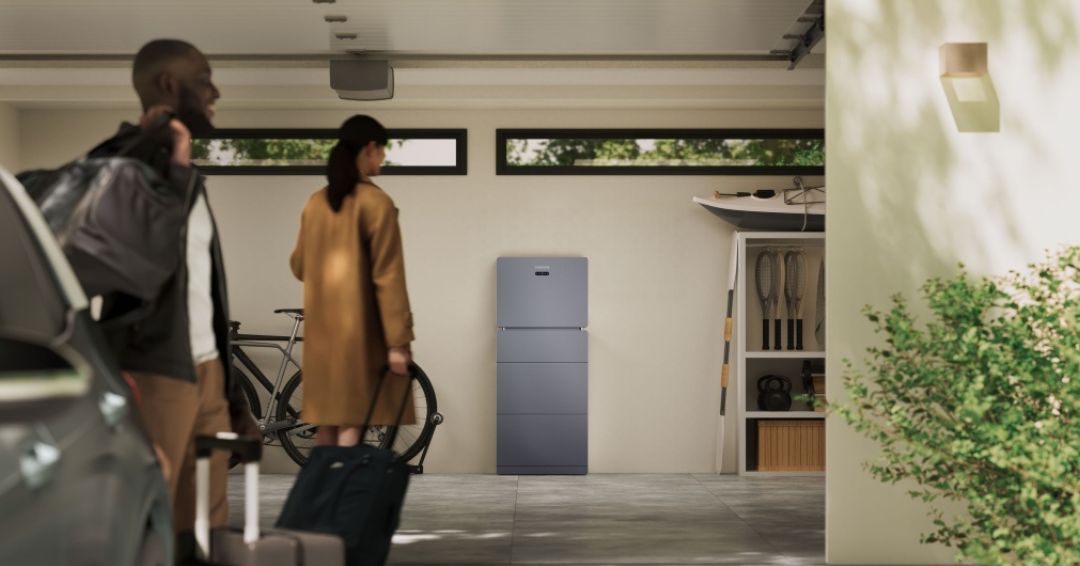
An all-in-one system designed for real life
The SunPower home energy storage system features a modular LFP battery, from 5 to 20 kWh.
Start with what you need today and expand later as your needs evolve - simply by adding modules.
The hybrid inverter automatically manages energy flows between your SunPower solar panels, Your battery, Your home,the grid.
You don’t need to do a thing - the system runs continuously in the background.
And in the event of a power cut? Your home stays powered. The system switches to backup mode in under 100 milliseconds - faster than a blink.
Certified, high-level safety
The SunPower battery includes:
- 8 thermal sensors
- Fire-resistant aerogel insulation
- A built-in fire suppression system triggering within 15 seconds in case of overheating
- Adaptive power management algorithms
All certified by TÜV Rheinland, a globally recognised safety authority.
This isn’t marketing - it’s engineering.
The SunPower app: your energy dashboard
From your smartphone, the SunPower app lets you track your solar production, battery charge level, energy consumption, and cumulative savings in real time. Clear graphs, an intuitive interface, and all the key information at your fingertips.
It’s also compatible with SunPower back-contact solar panels - among the most efficient on the market - as well as the SunPower shingled range, designed for optimised residential installations.
10-year battery warranty
The SunPower battery comes with a 10-year product and performance warranty with unlimited cycles - clear, transparent, and designed to reflect real-world battery health over time.
Take the next step
Want to know how much you could save with solar and storage?
The best answer isn’t generic - it depends on your home, habits, and location.
Find a certified SunPower installer near you and get a free, no-obligation assessment - often the first step towards a more secure and sustainable energy future.
FAQ
Does a solar battery work during a power cut?
Yes - if the system is designed for backup operation. Switching is instant (under 100 ms), so essential appliances continue running without interruption.
How long does a solar battery last?
The SunPower battery is backed by a 10-year warranty covering both product and performance. Unlimited cycles.
Can you install a battery without solar panels?
Technically yes - but it’s not ideal. Batteries are designed to store the electricity you generate, not primarily to charge from the grid.
How much does a solar storage system cost?
Costs vary depending on system size, property type and installation. A personalised quotation is the only way to get an accurate estimate - usually free and without obligation.
Do you need planning permission or approvals?
Some administrative steps are required depending on the country and grid operator. A certified SunPower installer will guide you through the process.
Is solar storage worth it?
Yes - when correctly sized. With self-consumption rates of 70–80%, compared to 30–40% without storage, the savings are real and increase over time. Check it out for yourself with our solar savings calculator.
Does SunPower offer any special offers or seasonal discounts on the battery?
Yes - Before the 31 December 2026, purchase a SunPower Energy Storage system and get a £300 Amazon gift card. Conditions apply.