
How does a solar panel work? A simple guide
How does a photovoltaic solar panel work? PV effect, cells, inverter, self-consumption: everything explained with SunPower.
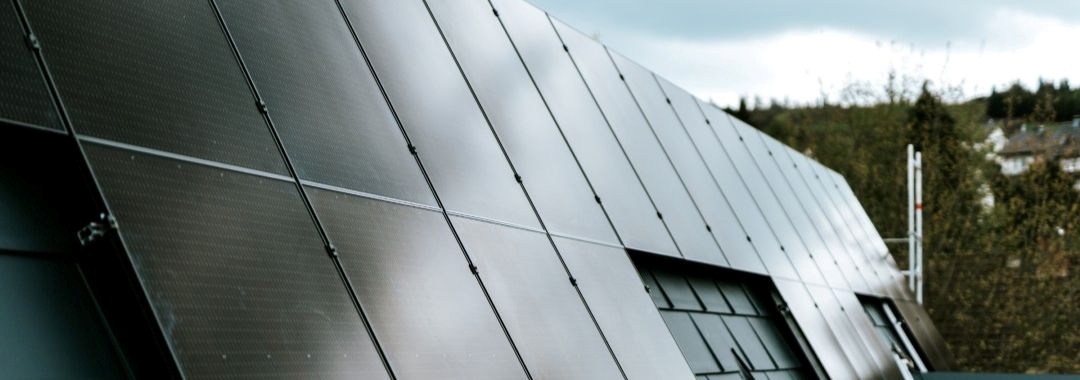
You see the sun shining on your roof and wonder how to turn that solar radiation into free electricity for your home? Good news: the way a photovoltaic solar panel works is much simpler than it seems. This guide explains everything step by step, without unnecessary jargon.
Solar energy: an infinite resource within reach of your roof
Our sun is a natural nuclear power plant. Every hour, it sends enough energy to Earth to cover global needs for an entire year. And yet, we only capture a tiny fraction of it.
The good news? Europe is well positioned to take advantage of it. By 2025, the EU’S photovoltaic fleet reached around 406 GW of installed capacity. In June that year, solar energy was even the main source of energy produced in the EU at 22%.
Solar electricity production is growing rapidly – in 2025 it increased by more than 20% compared to 2024, for the 4th consecutive year. With rising and volatile energy prices, switching to solar has never been more relevant.
You might be thinking: Solar energy does not produce electricity continuously. And that’s true - it generates mainly during the day, when sunlight is strongest, which also happens to be when electricity demand is highest. With a solar battery, however, you can store this energy for use at night. Solar plus energy storage is becoming a winning combination.
How does a photovoltaic solar panel work, step by step?
A solar panel works thanks to a fascinating physical phenomenon: the photovoltaic effect. Here’s how this system converts sunlight into usable electricity.

Step 1: Solar radiation hits the photovoltaic cells
The sun emits energy particles called photons. These photons travel 149.6 million kilometers in just 8.5 minutes before reaching your roof.
When they hit the photovoltaic cells of a solar panel, they release electrons from their atoms. This is how an electric current is created.
Step 2: The photovoltaic effect produces electricity
Each photovoltaic cell is made of silicon, the same material used in semiconductors in your electronic devices. Each cell is built with a positive layer and a negative layer. Together, they create an electric field that sets electrons in motion.
When electrons circulate in this field, they generate electricity: this is the photovoltaic effect in action.
Several photovoltaic cells assembled together form a solar panel. Several panels together form a complete photovoltaic system. The more panels you install, the more solar energy and electricity you produce for your home.
Step 3: The inverter converts direct current into alternating current
Solar panels produce direct current (DC): electrons flow in a single direction. However, your home operates on alternating current (AC) — the type supplied by the power grid.
The conversion is handled by the inverter.
The inverter is the brain of your solar system. It:
- Converts DC electricity into usable AC
- Monitors electricity production in real time
- Protects your installation against electrical faults
Microinverters, installed under each individual panel, allow each module to operate at maximum power. If one panel is shaded or dirty, the others continue to produce normally.
What are photovoltaic solar panels made of?
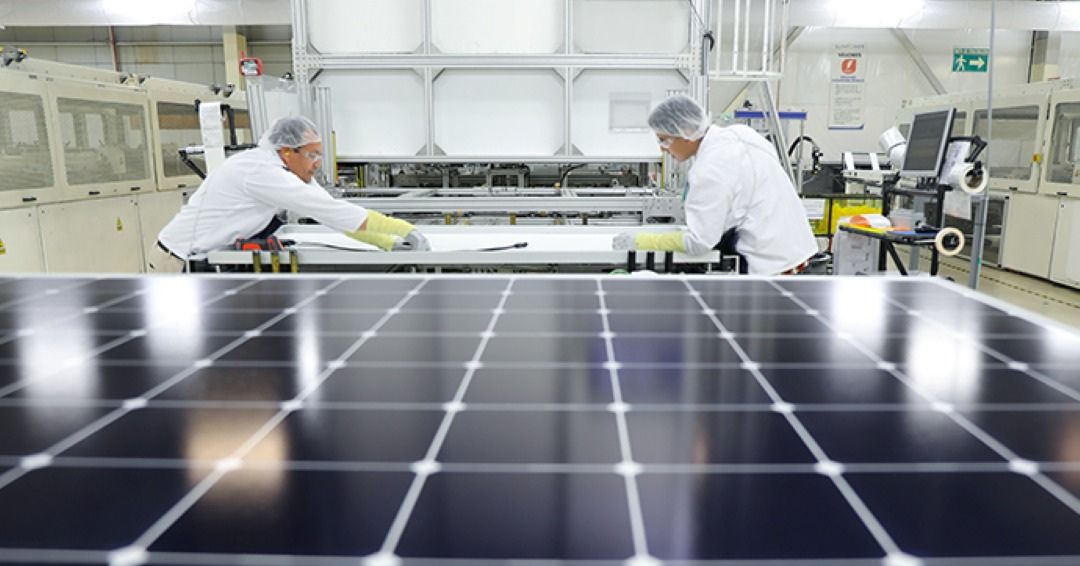
Photovoltaic solar panels are mainly composed of silicon cells encapsulated under glass. The choice of materials is key to durability and performance.
What are the features of a monocrystalline panel?
- Single silicon crystal structure
- High efficiency (from 23% to over 25% for the best models)
SunPower panels are made of proprietary encapsulation materials that reduce degradation caused by weather conditions.
If you’re a homeowner looking to compare models, you can explore our range of photovoltaic panels. An installer can help assess the best solution for your roof and your needs.
What is the efficiency of a solar panel?
The efficiency of a solar panel measures the proportion of solar energy converted into electricity. It ranges from 23% to 25%, depending on the technology used.
In practical terms:
A 500 Wp panel (0.5 kWp), properly oriented and installed can produce :
- in Northern Europe (UK, Sweden, Netherlands between 425 kWh and 500 kWh
- In Central Europe (France, Germany)between 500 and 700 kWh
- In Southern Europe (Spain, Greece, Italy) 650-850 kWh per year.
As an example, for a home equipped with 6 of our SunPower back-contact panels in Lyon, without shading and a 30° tilt, this represents:
- 3,250 to 3,940 kWh per year
- A significant share of a typical household’s electricity consumption
- Equivalent savings on electricity bills
Solar panel performance also depends on:
- Local sunlight exposure
- Roof tilt
- Orientation (ideally facing south, with a 30–35° angle)
How does a complete solar panel system work?
Here is how solar energy flows through your home, from roof to appliances:
- Sunlight hits the photovoltaic panels installed on your roof
- The panels convert this light into direct current
- The inverter converts it into alternating current
- The electricity powers your appliances
- Any excess electricity is either stored in a battery or fed back into the grid
Simple, clean, and increasingly efficient: that’s what a photovoltaic solar system looks like today.
This applies equally to private homes, commercial buildings, and public infrastructure. SunPower also offers a range of solar solutions designed for businesses and large-scale projects.
Self-consumption and selling surplus: what happens to the electricity produced?
Self-consumption means directly using the electricity generated by your solar panels. It is the most cost-effective solution:
- Every kWh consumed is one you don’t buy from the grid
- Immediate savings on your energy costs
When your panels produce more than you consume, the surplus electricity is fed back into the grid. According to the country you live in, you may receive a feed-in tariff - a payment from your energy supplier for each kWh sold.
This model, known as self-consumption with surplus sales, helps you maximize the return on your solar project.
SunPower energy storage: independence even after sunset
Your panels don’t produce electricity at night. That’s why SunPower energy storage makes all the difference.
This modular solar battery system allows you to store energy produced during the day for use in the evening, at night, or during cloudy weather.

Key features:
- Modular capacity: from 5 kWh up to 20 kWh (stackable units)
- LFP chemistry (LiFePO₄): safe, stable, cobalt-free technology
- Depth of discharge: 90% (4.5 kWh usable per 5 kWh installed)
- Integrated backup power: activates in less than 10 ms in case of outage
- 4-level protection system: thermal control, adaptive algorithm, IEC62619-certified cells, internal fire suppression system
- 10-year warranty on product and performance
- IP65 rating, suitable for demanding environments
With an all-in-one app, you can monitor production, consumption, and battery status in real time - one interface, one account, your entire solar energy system under control.
Photovoltaic vs. thermal solar panels: what’s the difference?
You may have heard of solar thermal panels. These do not produce electricity: they capture heat from solar radiation to heat water or your home.
Photovoltaic panels, on the other hand, produce electricity - and are the focus of this guide.
There are also hybrid (PVT) panels, which combine both electricity generation and heat recovery.
How to install photovoltaic solar panels in UK?
Your project must be carried out by a certified professional. This certification may be necessary to access some incentives and will ensure your system is safe.
To get started, you can consult SunPower’s network of certified installers, who will support you from design through to commissioning.
Take action: your solar journey starts here
Now that you understand how photovoltaic panels work, you can see that this technology is not intimidating at all. It is reliable, cost-effective, and accessible - whether you are a homeowner or a business manager.
All that’s left is to make the most of the sun that rises every day.