Solar Self-Consumption in the UK: Maximise Your Solar Savings
Learn how to maximise solar self-consumption in the UK with SunPower panels, battery storage and smart energy management.
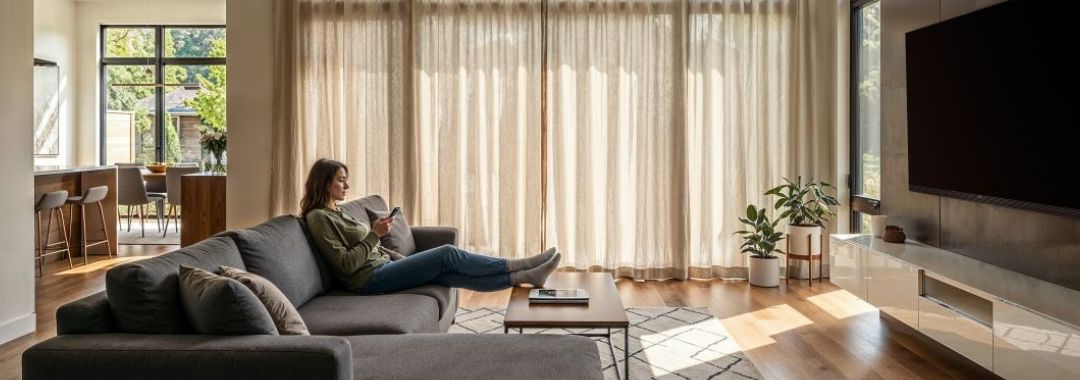
Solar self-consumption means producing your own electricity with solar panels and using it directly in your home.
You buy less electricity from the grid. Your bills go down. And you actively contribute to the energy transition.
Across UK, residential solar adoption continues to grow rapidly. Self-consumption has become the leading model for homeowners, offering both financial savings and greater energy independence.
With the right equipment - and a trusted partner - the results can be remarkable.
How does solar self-consumption actually work?
Self-consumption vs exporting surplus: what’s the difference?
When your solar panels generate electricity, you have two main options.
Full self-consumption
You use all the electricity you produce.
Nothing is exported to the grid.
This is the simplest approach - ideal if your system is well matched to your daytime usage.
Self-consumption with surplus export
You use your own electricity first.
Any unused energy is exported to the grid and sold (depending on your country’s scheme).
In most European markets:
- Export tariffs are significantly lower than retail electricity prices, when they exist.
- Self-consumed solar electricity is therefore far more valuable
Key takeaway:
On average across Europe, each kWh you self-consume can be worth 2 to 8 times more than exporting it, depending on your country and tariff.
Natural, optimised or stored self-consumption: which is right for you?
There are three levels of self-consumption. The higher you go, the more savings you unlock.
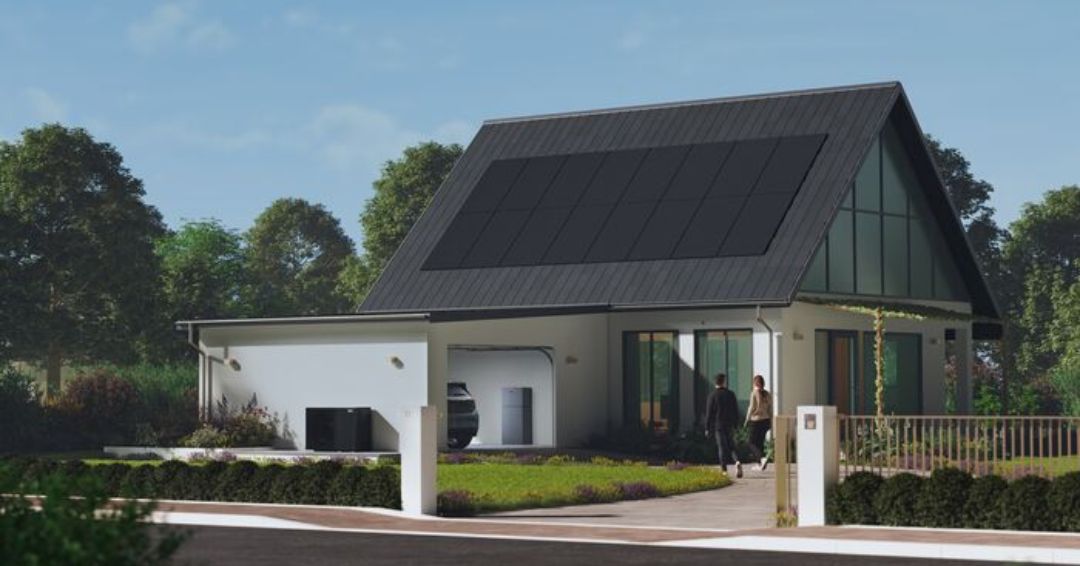
1. Natural self-consumption
You use electricity as it’s produced.
- Appliances running during the day (washing machine, heat pump, etc.) use solar energy
- No additional investment required
Simple and effective.
2. Optimised self-consumption
You shift your energy use to peak solar hours (typically 10am–3pm).
- Schedule appliances
- Charge devices during the day
Higher self-consumption without changing your system. The SunPower app can help you assess the best time and which appliances to shift.
3. Stored self-consumption
You add a battery system.
- Store excess energy during the day
- Use it in the evening or overnight
Typical results:
- Without battery: 30–40% self-consumption
- With battery: 70–80% self-consumption
A home energy storage helps you achieve maximum independence and savings and it's particularly relevant if you electrify your home (EV, heat pump). Our solar calculator can help you estimate your savings in minutes.
SunPower solutions to maximise your self-consumption
SunPower offers a complete ecosystem:
- High-performance solar panels
- Modular battery storage
- Smart energy management app
All components work seamlessly together - giving you full control over your energy use. And until the 31st of December, benefit from our special offer on SunPower battery. Get a £300 Amazon gift card for the purchase of a qualified battery system.
SunPower panels: more power, even in low-light conditions
SunPower’s back-contact solar technology has been proven in the field for over 20 years.
- All electrical connections are on the back of the cell
- The entire front surface captures sunlight
Result:
- Earlier production in the morning
- Better performance on cloudy days
- Strong output until sunset
Every extra kWh produced is one less you need to buy from the grid.
Performance comparison:
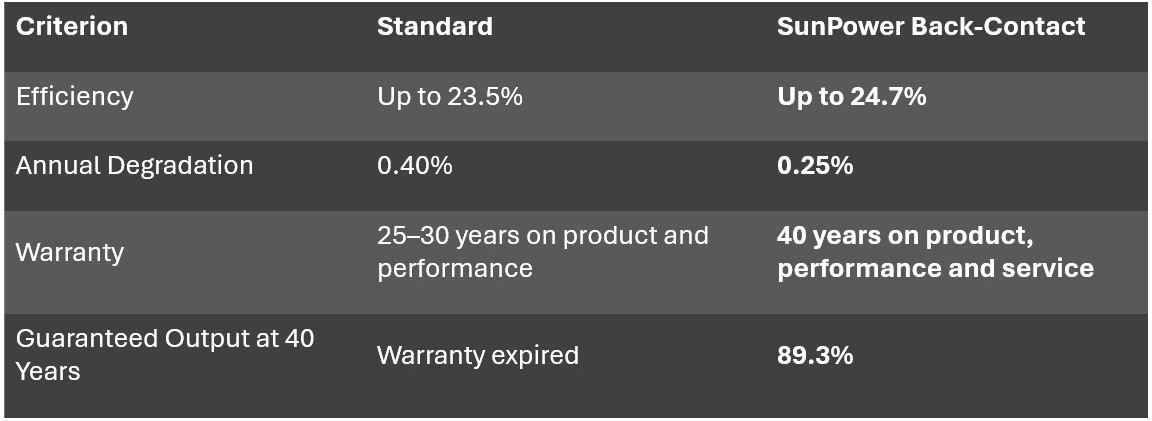
What this means: For self-consumption, it’s simple: higher output and slower degradation mean more usable energy year after year - and up to 10 to 15 years of additional performance compared to other brands.
Return on investment: how quickly does solar pay back?
Your savings come from two sources:
- Electricity you no longer buy from the grid
- Typically €0.20–€0.35/kWh across Europe
- Income from exported electricity
- Usually much lower than retail prices
The conclusion is clear:
Today, self-consumption is the key to making your solar investment truly pay off and unlocking real savings.
Thanks to SunPower panels - with an annual degradation rate roughly half the industry standard - your system delivers higher performance for longer, allowing your savings to grow over a much longer guaranteed lifespan than other brands.
In practice: In France, our partner installer 6nergies reports a payback period of just 6 to 7 years for customers near Lyon.
SunPower battery: store up to 20 kWh of solar energy
The SunPower battery is the ideal complement to your system.
- Store surplus energy during the day
- Use it in the evening, at night, or during low sunlight
Its main advantage: it adapts precisely to your needs. The 5 kWh modules can be stacked up to a total capacity of 20 kWh. Large household, heat pump, EV charger, swimming pool… the system is sized to match your real lifestyle.
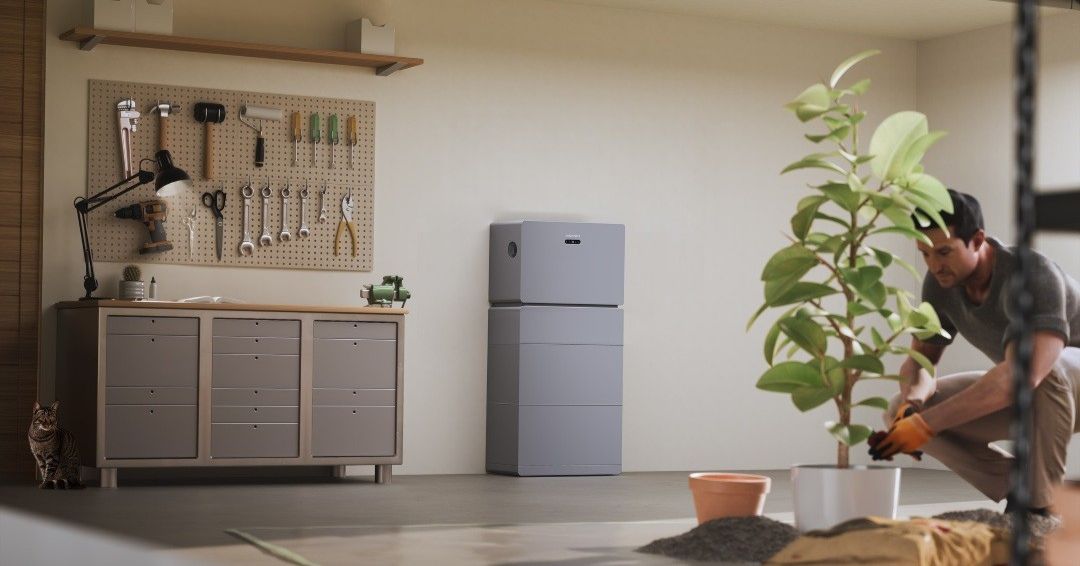
Key features
- Modular design: 5 kWh units up to 20 kWh total
- LFP (lithium iron phosphate): safest and most stable chemistry
- 90% depth of discharge : nearly all stored energy is usable
- Multi-layer fire protection: thermal control, aerogel insulation, and an integrated fire suppression system
- Backup power: instant switchover (<10 ms) during outages – unnoticeable in your home
- 10-year product and performance warranty
Your home keeps running on solar.
SunPower One app: control your energy in real time
With the SunPower One app, everything is connected in a single interface.
From your smartphone, you can track:
- Your solar production, tracked kWh by kWh and hour by hour
- Your electricity consumption and how much is covered by solar energy
- Your battery charge level and energy flows to and from the grid
- Your total savings since your system was installed
This allows you to understand how to optimise usage:
- Run appliances at peak production times
- Charge your EV overnight from stored energy
- Prioritise energy flows
A smart system that works for you - and your budget.
Installing solar panels and battery storage in Europe: key steps
The process is simpler than you might think. Your certified installer typically handles everything:
- Planning permission (if required)
- Grid connection application
- Installation (panels, inverter, battery)
- Commissioning and meter setup
- Export agreement (if applicable)
A SunPower-partner installer manages the full process for you.
Take the next step: get a tailored solar assessment
Every home is different. Every household has its own consumption habits and future plans. The best decision always starts with a free, personalised assessment.
A SunPower partner installer analyses your situation and provides a detailed simulation, including estimated annual production, projected self-consumption rate, expected savings, and return on investment.
Request your free, no-obligation solar study today.
FAQ - Solar self-consumption
What is the self-consumption rate?
The percentage of solar energy you use directly.
Example: 70% means you use 70% of what you produce yourself.
Plug-and-play kit or full rooftop system?
A plug-and-play solar kit simply plugs into a standard outlet, with no grid connection required. It’s easy to install but limited in output.
A full rooftop solar system, on the other hand, is connected to the grid, delivers much greater long-term savings, and any unused energy can be stored in a battery for use later, when demand is higher.
Is a battery essential?
No - but it significantly increases your self-consumption (from 30-40 up to 70-80% with a correctly sized battery system).
What happens during a power cut?
With a SunPower battery, your home switches to backup mode in less than 10 ms. All your essential appliances keep running.
How can I monitor my system?
Via the SunPower One app - real-time tracking of production, consumption and savings.